How Signage Can Bridge the Gap Between Offline and Online Branding
In today’s digital-first world, businesses often prioritise online marketing — from social media and paid ads to SEO and websites. But customer behaviour has evolved beyond single-channel interactions.
Customers no longer interact with brands through a single channel; they move seamlessly between digital and physical experiences.
A customer might discover your brand online, visit your physical store, and then return online to make a purchase decision. This shift has made one thing clear: branding needs to feel connected across every touchpoint.
That’s where signage becomes more than just a visual tool — it becomes a bridge between offline and online branding.
Why the Offline–Online Gap Exists?
Many businesses still treat online and offline branding as separate strategies:
- Online: Focused on performance (clicks, conversions, traffic)
- Offline: Focused on visibility (stores, signage, print)
The Problem?
When these don’t align:
- Customers feel disconnected
- Brand recall weakens
- Trust drops
Bridging this gap is no longer optional — it’s essential for staying competitive.
The Role of Signage in Modern Branding
Signage today is no longer just about displaying a brand name. It plays a much larger role in creating a cohesive brand experience.
It Helps Businesses:
- Reinforce brand identity
- Extend digital messaging into physical spaces
- Guide customers across touchpoints
When used strategically, signage becomes a connector between what customers see online and what they experience offline.
Creating a Seamless Brand Experience
In modern branding, consistency across touchpoints is essential for building recognition and trust.
Signage supports this by aligning key visuals and messaging elements:
- Colours
- Typography
- Tone of voice
- Campaign messaging
When customers recognise the same identity across platforms, it builds familiarity and trust — two key drivers of conversion.
Turning Physical Spaces into Digital Touchpoints
One of the most effective strategies today is making signage interactive.
How Businesses are Doing it:
- QR codes linking to offers or websites
- Social media handles displayed in-store
- NFC-enabled touchpoints
- Digital displays with live updates
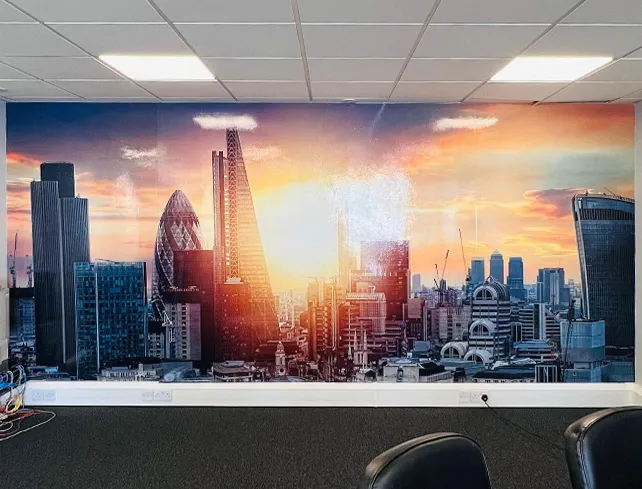
For example, well-designed wall graphics can combine storytelling with digital direction — guiding customers from a physical space into an online journey. Think of the modern customer journey:
- Discover brand online
- Visit physical location
- Engage with in-store signage
- Return online to convert
Signage plays a critical role in steps 2 and 3.
It Helps to:
- Reinforce messaging seen online
- Guide customers within the space
- Encourage next actions
This continuity ensures the brand experience feels unified — not fragmented.
Extending Brand Reach with Mobile Signage
Branding is no longer limited to fixed locations.
With solutions like van signage, businesses can:
- Take their brand into real-world environments
- Reach wider audiences beyond store locations
- Reinforce digital campaigns offline
This repeated exposure strengthens brand recall and builds long-term trust.
Enhancing Brand Recall Through Physical Presence
Unlike digital ads, which are often short-lived, signage provides continuous physical visibility.
Why Physical Signage Still Matters:
- It remains visible for longer periods
- Creates real-world impressions
- Strengthens memory association
This is why signage continues to play a critical role alongside digital marketing. Offline and online experiences serve different purposes:
- Offline: Emotional, sensory, immersive
- Online: Informational, analytical, decision-driven
Signage connects the two by:
- Creating emotional engagement in physical spaces
- Supporting logical decisions online
This balance is what drives modern consumer behaviour.
Common Strategies Smart Businesses Use
1. Matching Campaigns Across Channels
Running the same offer online and reflecting it in-store signage.
This ensures consistent messaging across touchpoints and improves campaign recall.
It also strengthens customer confidence in the brand.
2. Using Signage for Retargeting
Encouraging customers to follow, subscribe, or revisit online platforms.
QR codes and social prompts help convert offline visitors into digital audiences.
This extends engagement beyond the physical interaction.
3. Creating Instagrammable Spaces
Designing signage that encourages customers to take photos and share online.
These moments act as organic marketing when shared on social media.
They also increase brand reach without additional ad spend.
4. Integrating Digital Displays
Using screens to display live content or social feeds.
This keeps messaging dynamic and relevant.
It also enhances the in-store experience with real-time engagement.
Common Mistakes to Avoid
Even today, many businesses fail to use signage strategically.
1. Treating Offline and Online Separately
This creates inconsistent messaging and weakens brand identity.
Customers struggle to connect the brand across platforms.
2. Ignoring Interactive Elements
Static signage limits engagement opportunities.
Without digital integration, the customer journey often ends too soon.
3. Lack of Visual Consistency
Mismatched colours, fonts, or tone create confusion.
This reduces brand recognition and perceived professionalism.
4. Not Tracking Performance
Without insights, optimisation becomes impossible.
Tracking engagement helps improve ROI and refine future strategies.
The Future of Connected Branding;
As technology evolves, signage is becoming increasingly integrated with digital systems and real-time data.
What to Expect:
- AI-driven personalised signage
- Augmented reality experiences
- Real-time data integration
- Hyper-local targeting
Signage is evolving from a static tool into a dynamic brand experience platform.
Final Thoughts
The line between offline and online branding is disappearing. Customers don’t think in channels — they think in experiences.
Signage is what connects those experiences.
By leveraging tools like wall graphics and van signage, businesses can create a seamless journey that:
- Builds trust
- Enhances visibility
- Drives engagement
- Increases conversions
In 2026 and beyond, the brands that succeed won’t choose between offline or online — they’ll master both, seamlessly.

A digital and print specialist with over decades of experience ranging from design to production, Nimesh is committed to quality and working with clients to add value to their businesses. His technical knowledge of print machinery operation is matched only by his love of the print industry.